


Why Your Inventory Numbers Never Match
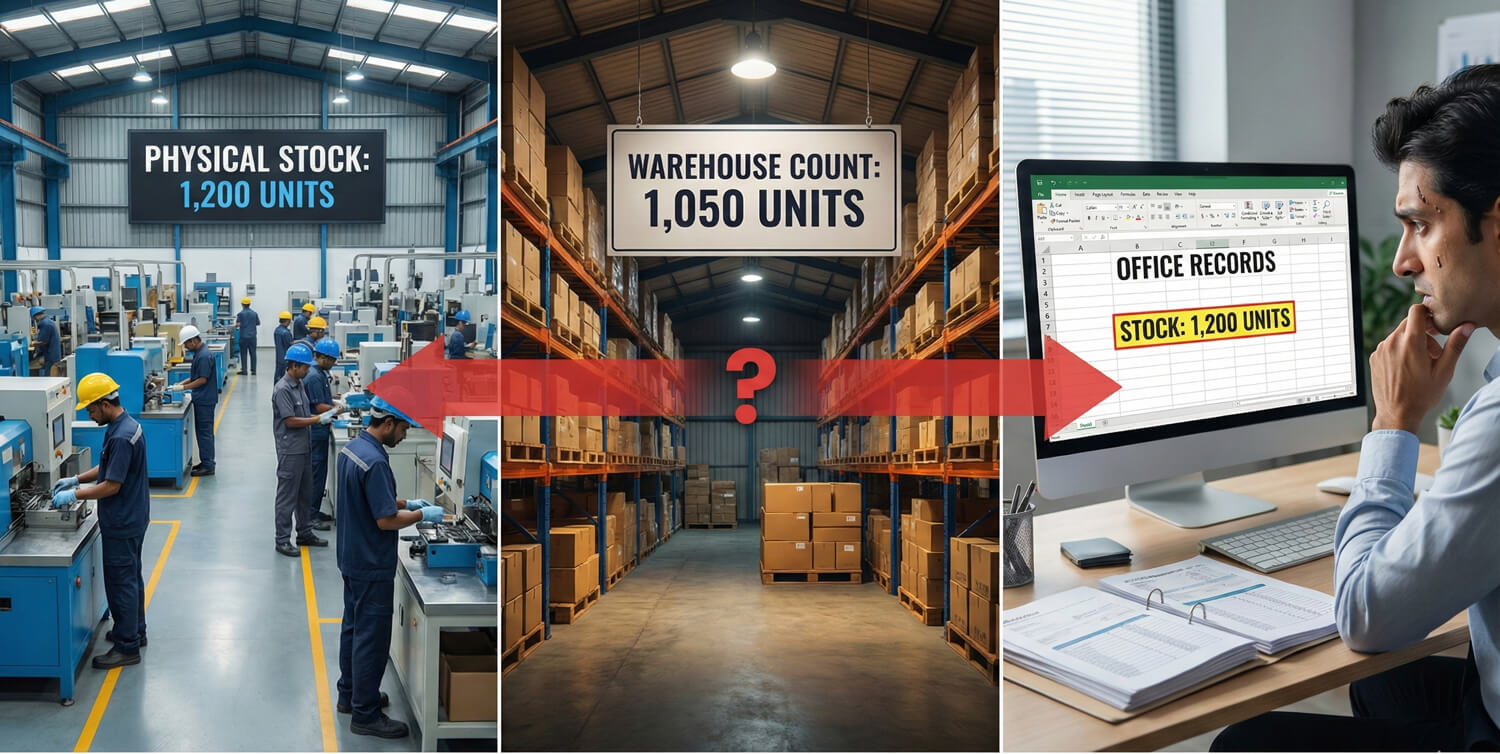
Your stock register says 1,200 units.
Your godown has 1,050.
Production is waiting. Dispatch is delayed. Accounts is panicking because GST stock figures don’t reconcile.
This isn’t poor planning it’s inventory mismatch, a problem Indian manufacturing MSMEs face daily. The issue isn’t effort; it’s fragmented tracking across factory floors, godowns, job workers, and Excel sheets that don’t communicate.
In this guide, we’ll cover:
-
Where inventory mismatch starts
-
Why it keeps recurring despite “controls”
-
How MSMEs reduce stock variance from double digits to near-zero without slowing operations
How Inventory Mismatch Starts Long Before You Notice It
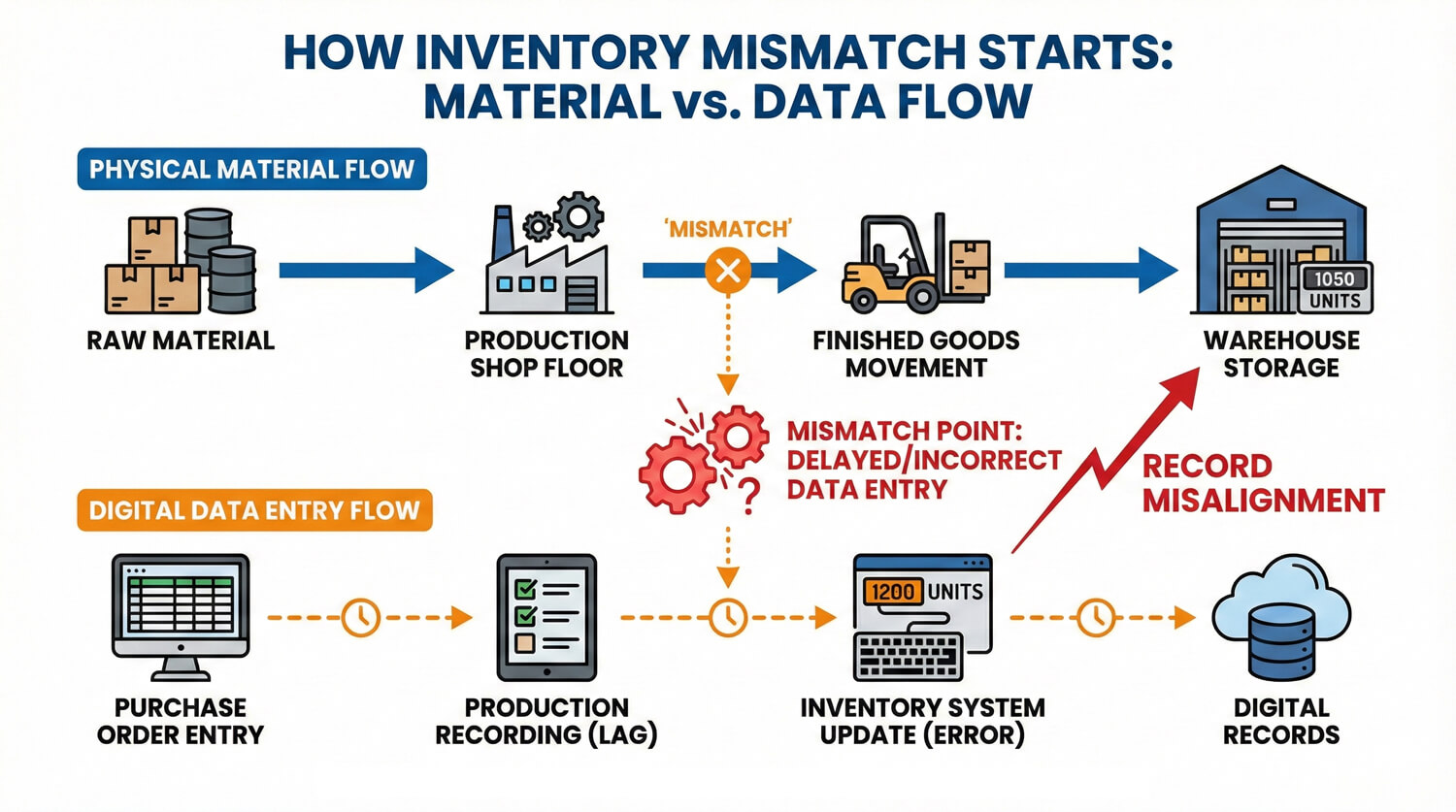
Inventory mismatch rarely appears during audits it starts at handoff points.
The core insight: Every time material changes hands without a system-verified entry, mismatch is created silently.
Common handoff points in MSMEs:
-
Raw material issued to production without real-time entry
-
Semi-finished goods moved between shop floor and godown
-
Job work sent out and received with approximate quantities
-
Finished goods dispatched before invoicing catches up
Real scenario:
A fabrication unit issues steel plates to production based on requisition slips. Entries happen end-of-day. One urgent issue goes unrecorded. That “one time” repeats daily by month-end, stock is off by 8-10%.
How Excel-Based Tracking Creates Invisible Inventory Errors
The biggest myth: “Excel is fine if people are careful.”
The real issue: Excel doesn’t fail manual coordination does.
Why Excel breaks at scale:
-
Multiple files for purchase, production, and dispatch
-
No real-time stock deduction or validation
-
No linkage between material issue and consumption
-
Backdated entries distort actual availability
Mini case:
A packaging manufacturer tracked RM, WIP, and FG in three separate sheets. Individually, all seemed accurate. Combined variance at audit: 18%.
Key takeaway: Excel shows numbers. It doesn’t enforce discipline.
How Inventory Mismatch Turns Into GST and Compliance Risk
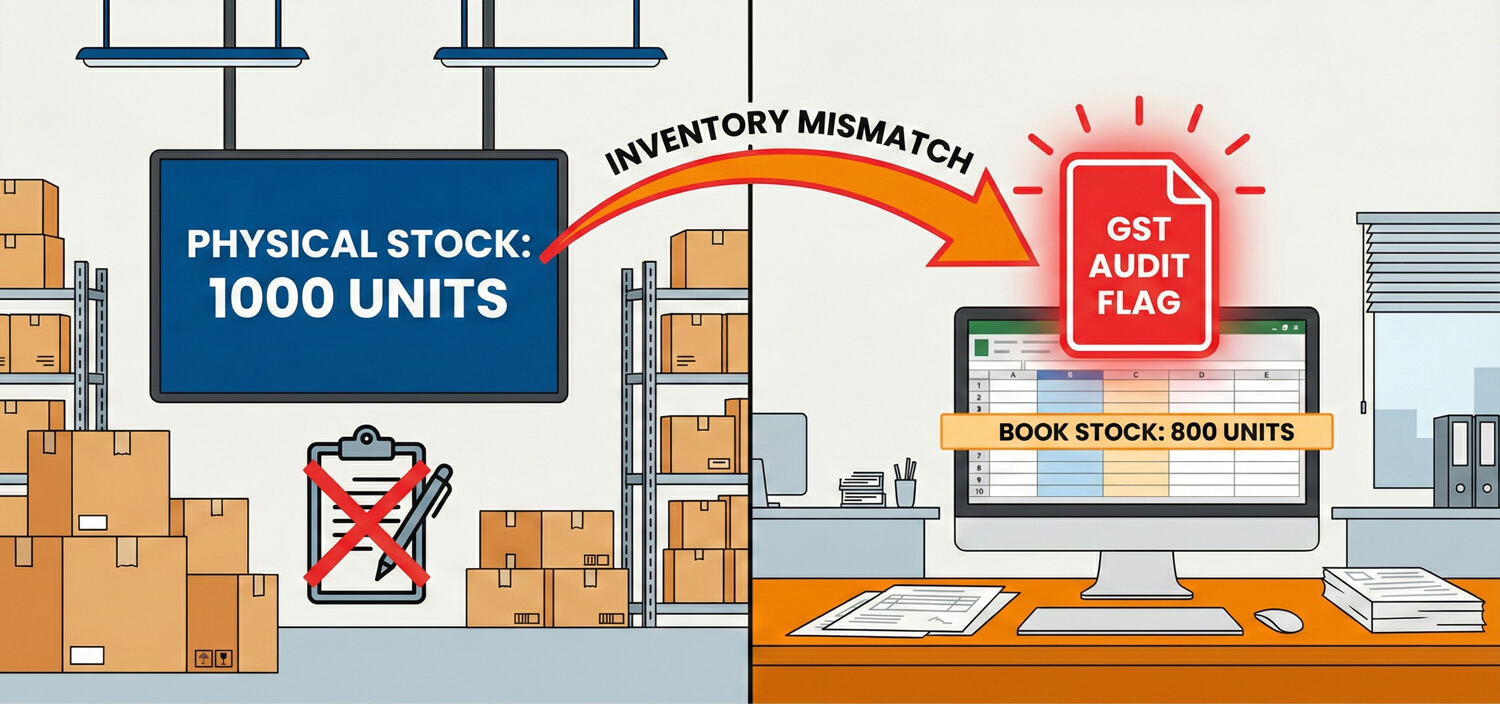
Inventory errors don’t stay operational they become financial liabilities.
Common consequences:
-
Stock as per books doesn’t match physical stock during GST audit
-
Excess stock raises questions of unaccounted purchases
-
Shortages lead to ITC reversals and penalty explanations
Common GST triggers:
-
GSTR-1 vs GSTR-3B quantity mismatch
-
Closing stock not aligning with annual returns
-
Job work material not properly tracked
Stock mismatch GST issues often surface months after the operational mistake, making correction expensive.
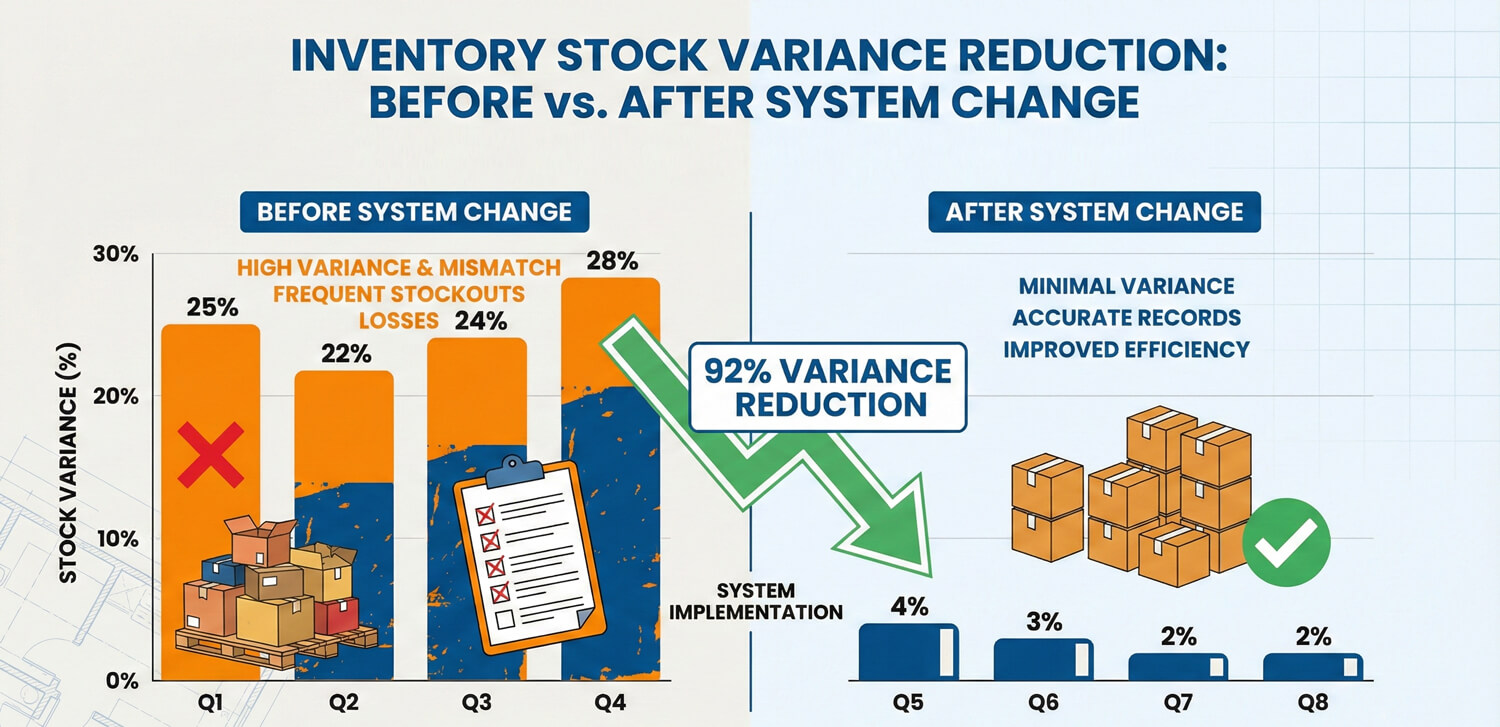
How MSMEs Reduce Inventory Variance From 18% to 2%
Fixing inventory mismatch is not about tighter supervision it’s about system design.
Effective practices:
-
Single source of truth : One system for RM, WIP, and FG no parallel registers.
-
Transaction-level control : Material cannot move without a system entry (issue, transfer, receipt).
-
Role-based accountability : Operators issue, supervisors approve, accounts reconcile clearly separated.
-
Daily variance visibility : Mismatch seen today, not at month-end.
Case snapshot:
A mid-size engineering manufacturer implemented structured inventory flows under an ERP framework. Stock variance dropped from 18% to 2% in 4 months, without increasing headcount.
Quick Wins: 3 Immediate Actions to Reduce Inventory Mismatch
-
Stop batch updates – Update stock at the time of movement, not end-of-day
-
Separate issue and approval – Never let the same person issue and record material
-
Reconcile WIP weekly – Most mismatches hide in semi-finished goods
What is inventory mismatch?
Inventory mismatch occurs when physical stock doesn’t match system or book records. It matters because it causes production delays, financial losses, and GST compliance risks. MSMEs fix it by controlling stock movement at every transaction point.
Why does inventory mismatch happen in Indian MSMEs?
It usually happens due to manual entries, Excel-based tracking, job work movement, and delayed updates. These gaps compound daily until differences become unmanageable.
Can inventory mismatch cause GST issues?
Yes. Stock mismatch GST issues arise when physical inventory doesn’t align with returns or books, triggering audits, ITC reversals, or penalties.
Is ERP the only solution for wrong stock count?
ERP isn’t about software it’s about process enforcement. When Excel can’t enforce real-time control, ERP becomes necessary.
How often should MSMEs reconcile inventory?
Critical items weekly, full inventory monthly. Daily variance visibility prevents month-end surprises.